
Everything is Art. Everything is Politics - Ai Weiwei at Factory International (Part 1)
Part 1: Button Up! Exhibition
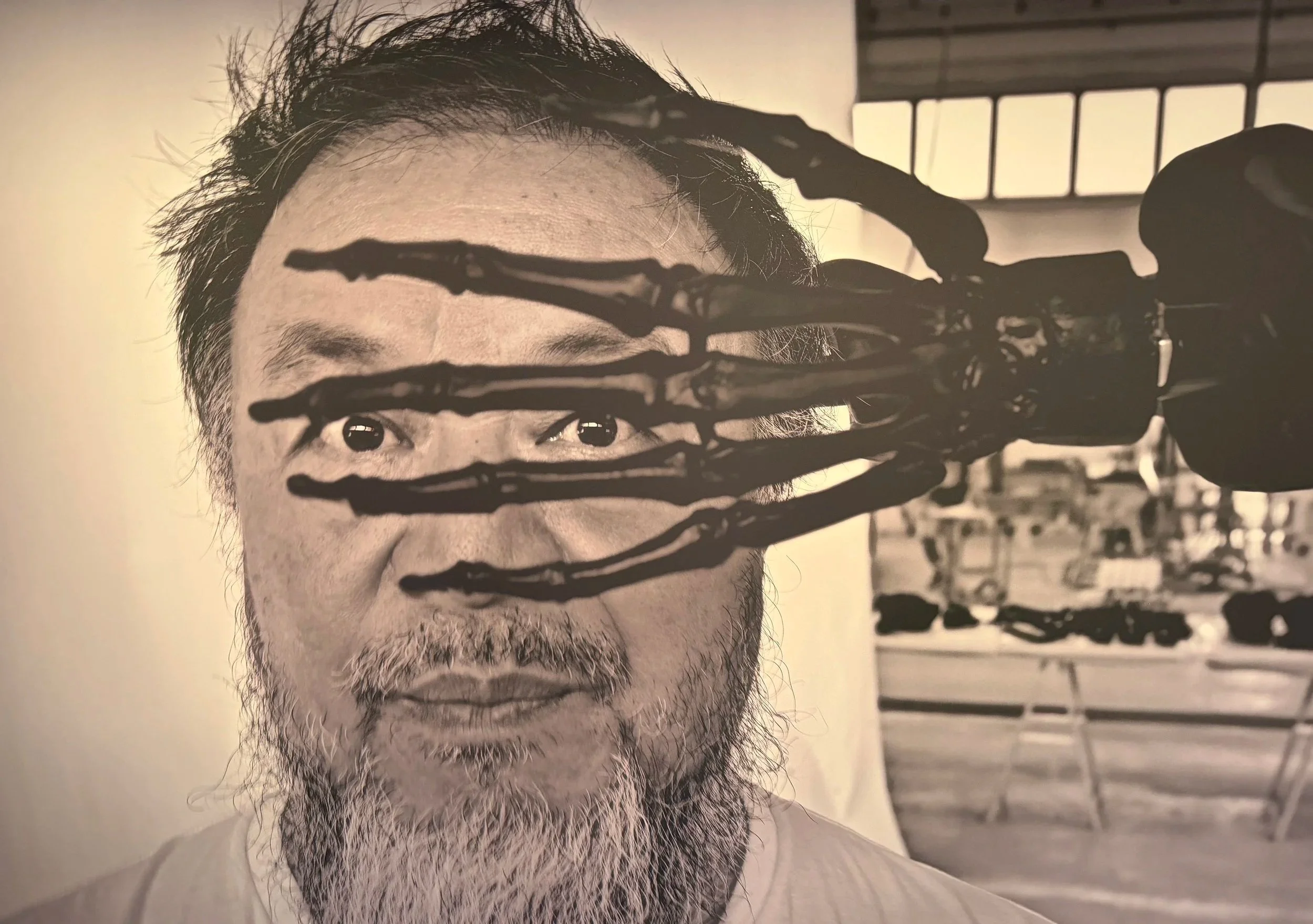
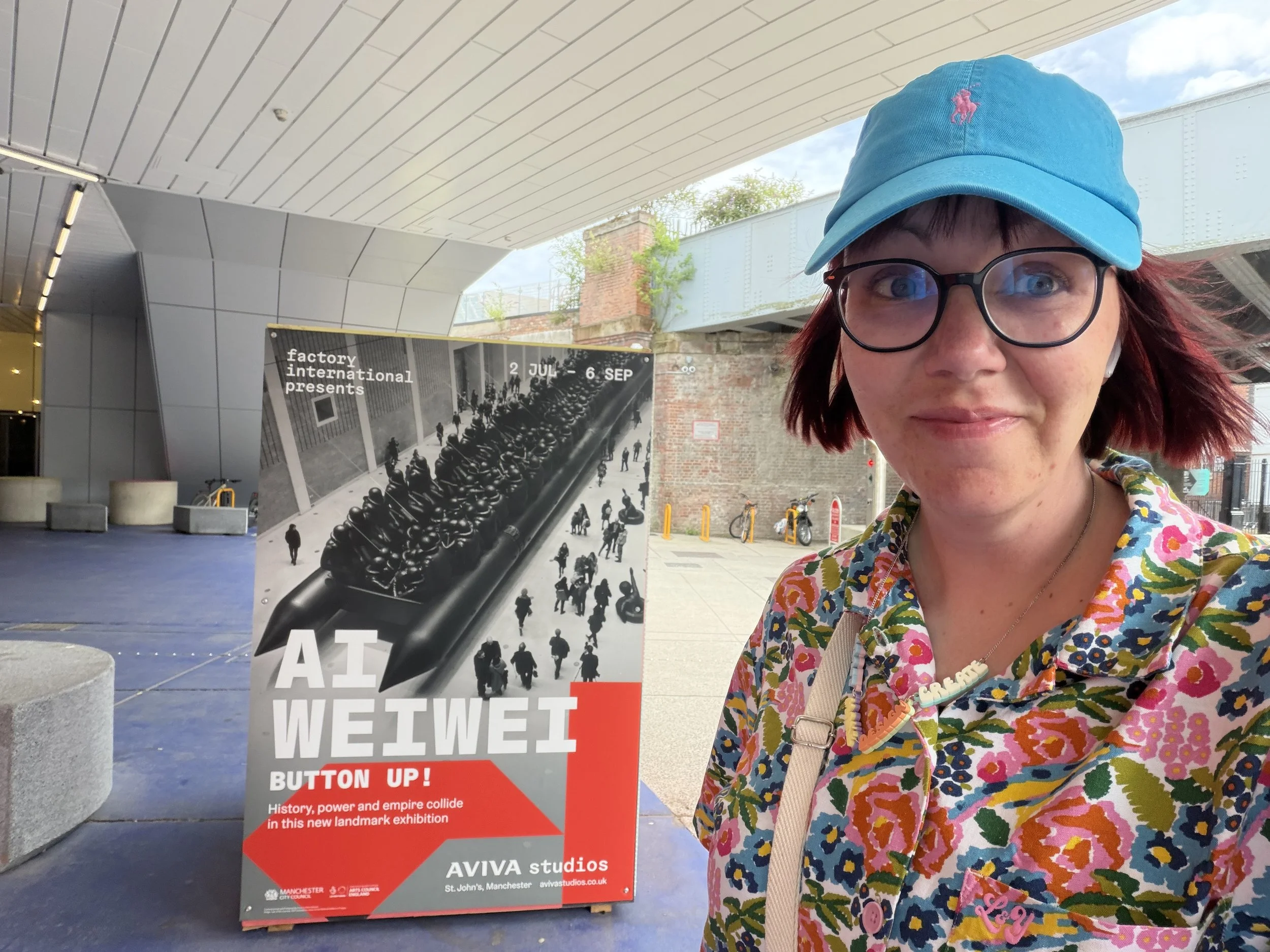
I was in my absolute element immersed in Ai Weiwei’s extraordinary Button Up! exhibition at Aviva Studios, Factory International in Manchester.
Part 1 of my blog explores the installation, some stories behind the artworks, and the powerful themes of migration, censorship, history and human rights.
I first encountered Ai Weiwei’s work many years ago during a study trip to Beijing, where I visited the iconic National Stadium, the “Bird’s Nest”, which he co-designed for the 2008 Olympic Games.
That experience sparked my curiosity, and I soon began reading his blog and following his art and activism more closely. Admittedly, a little obsessively at times.
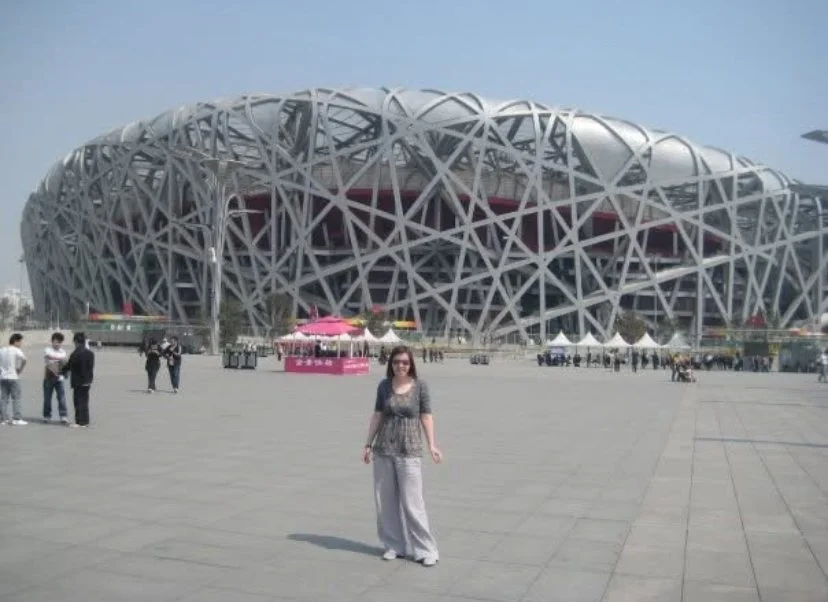
Standing outside the “Bird’s Nest” in Beijing
Over the years, I have feared for Ai Weiwei’s safety as he has continued to challenge the Chinese government and defend freedom of expression, despite the personal risks involved.
In 2021, I had the privilege of meeting him at a book event in Edinburgh, where he signed my copy of his memoir, 1000 Years of Joys and Sorrows.
Standing beside the man whose work and ideas I had followed for so long was a quietly surreal moment.
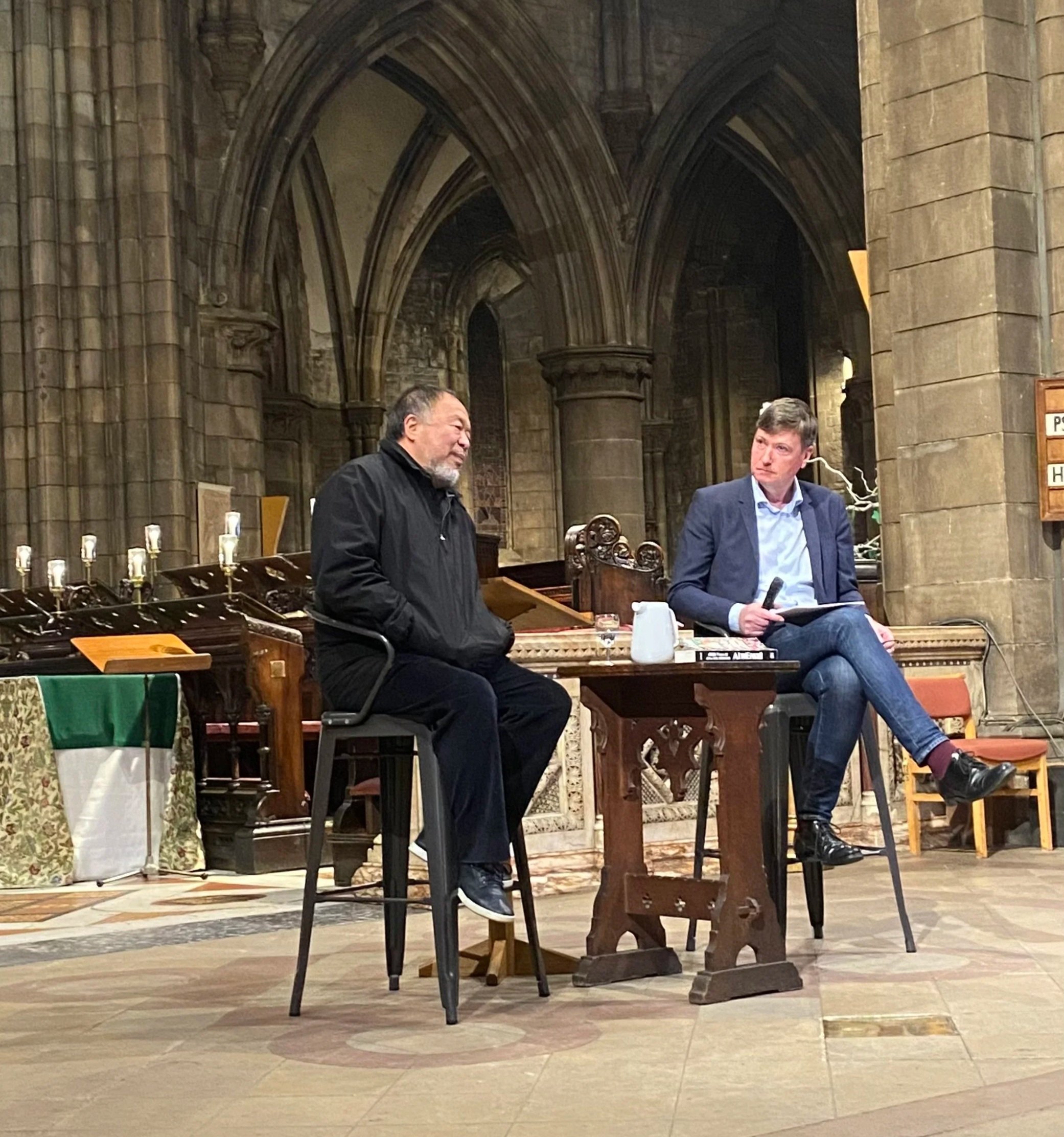
Ai Weiwei book event at St Mary’s Cathedral, Edinburgh
To me, Ai Weiwei isn't simply one of the world's greatest contemporary artists; he is one of the world's most important thinkers. It feels remarkable that he is still here, continuing to create and refusing to be silenced.
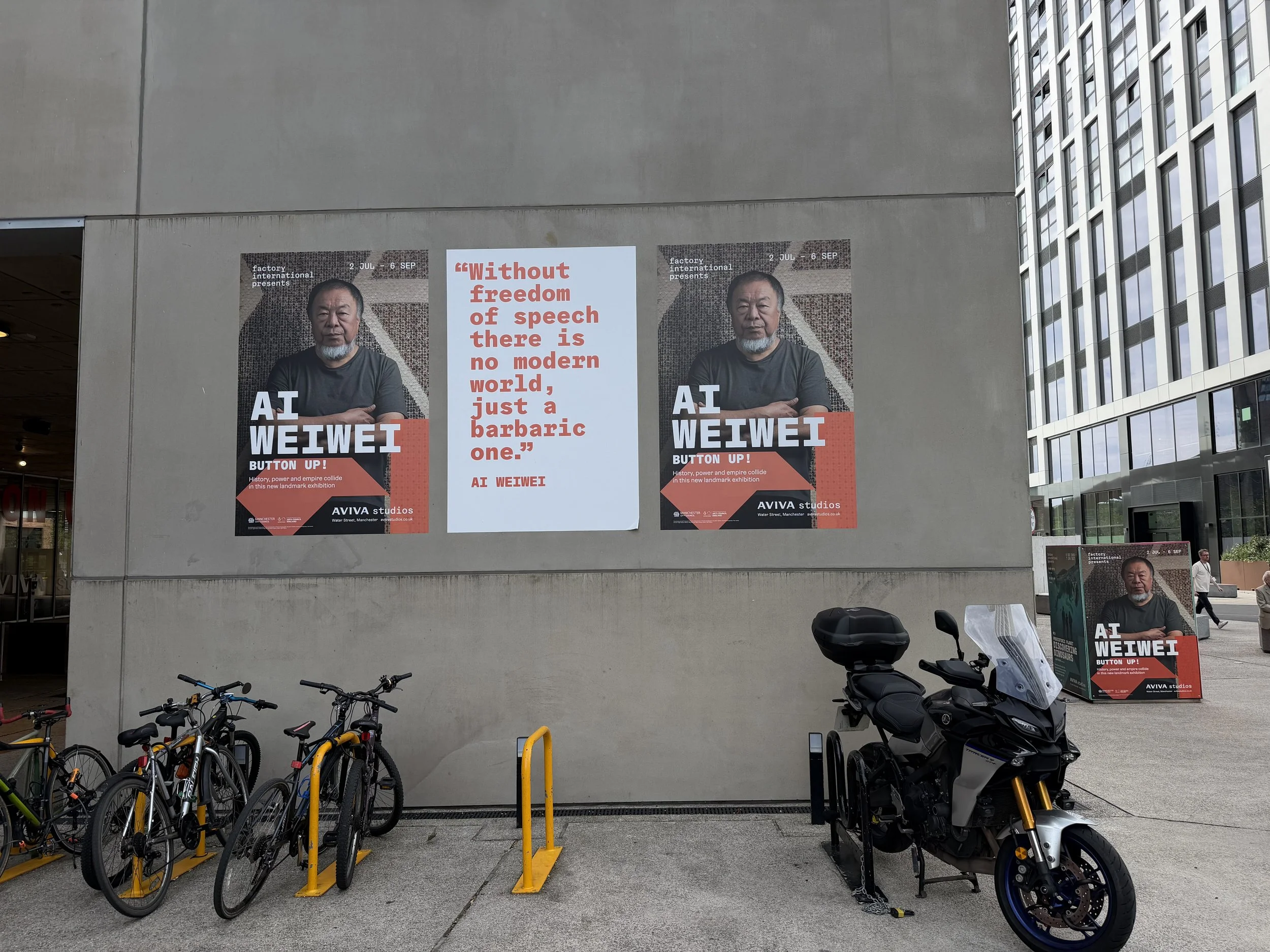
It was my first visit to Aviva Studios, Factory International’s spectacular £240 million arts venue, which opened in 2023.
Stepping into the vast Warehouse exhibition space, I caught myself saying “wow” out loud. A rare, instinctive response that captured the impact of seeing the exhibition for the first time.
As other visitors entered the space, I found myself smiling at their reactions as they paused to take in the scale of the exhibition.
Ai Weiwei Button Up! exhibition
Inspired by Manchester's industrial past, the exhibition explores how the legacies of trade, empire and exploitation still shape the world today.
Through themes of migration, censorship, war, colonialism and state power, Ai Weiwei challenges visitors to consider how history continues to influence our humanitarian and political crises.
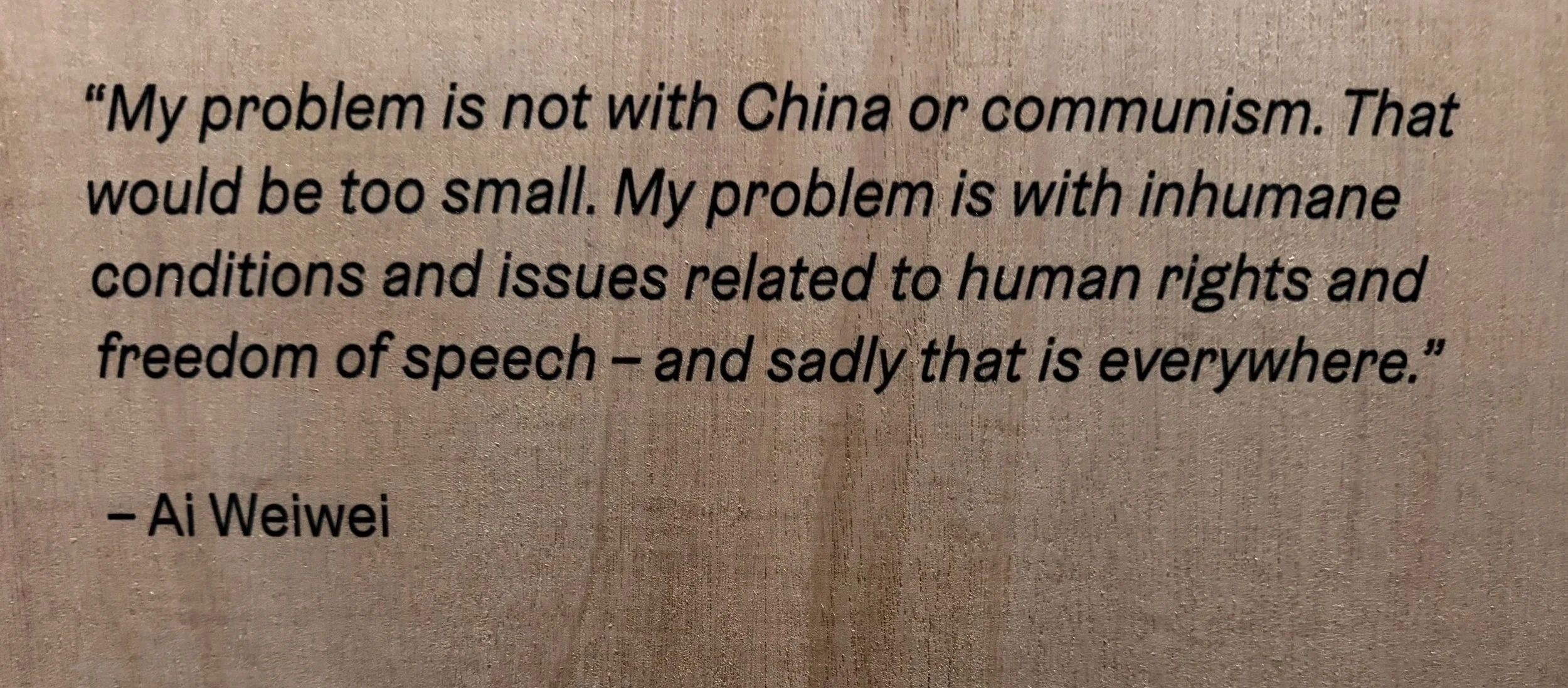
The themes are undeniably heavy, but the exhibition never felt inaccessible. The interpretation alongside each work offered just enough context to inform without telling you what to think, leaving space to draw your own conclusions.
Hundreds of folding stools were arranged throughout the gallery, inviting visitors to slow down and spend more time with the works. A thoughtful touch that I really appreciated.
Inspired by traditional folding stools once used by travellers on horseback, each one was handmade by Ai Weiwei, bringing together function and craftsmanship.
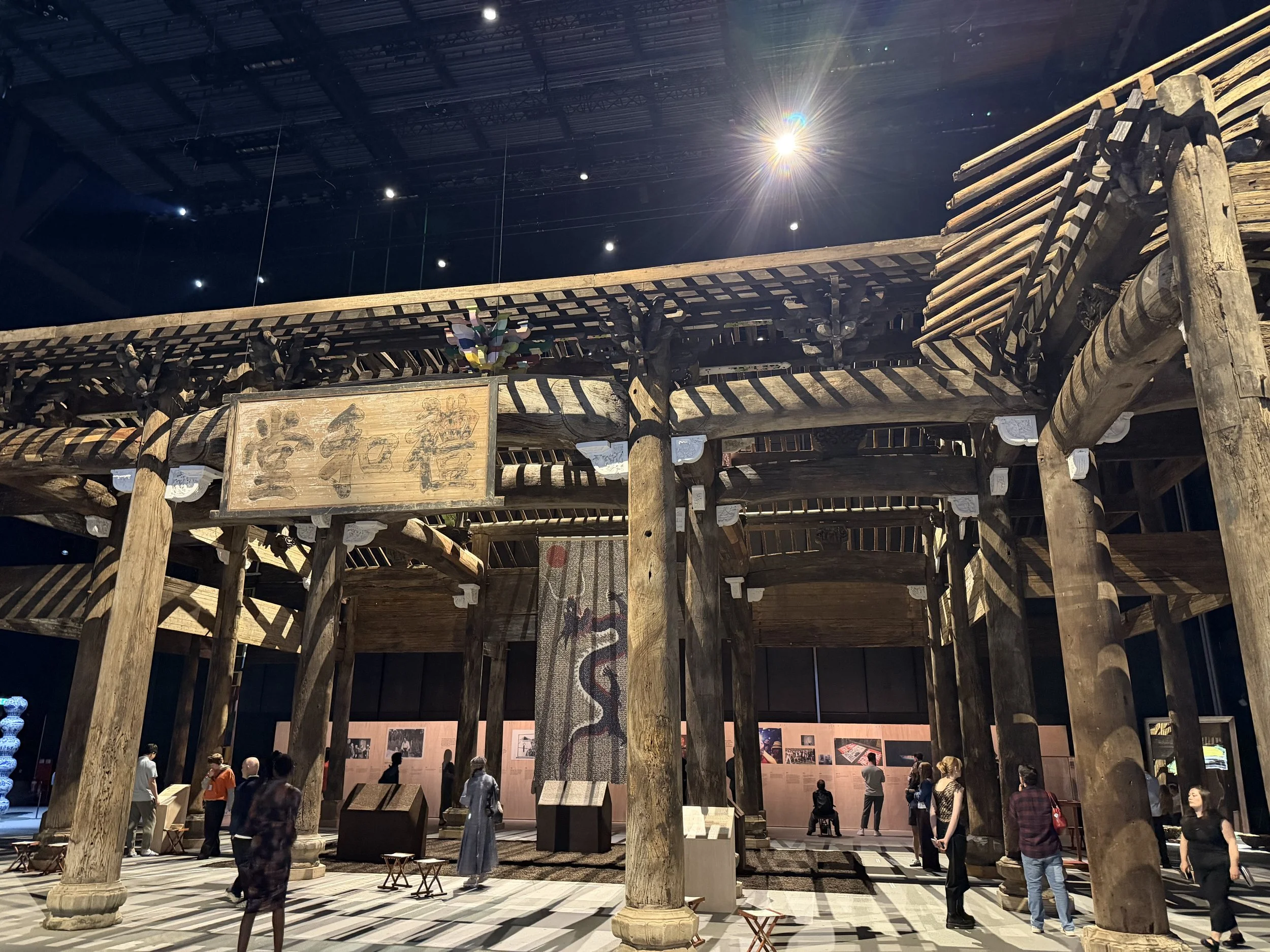
The Wang Family Ancestral Hall - a monumental 400 year old temple from the Ming dynasty, saved from ruin and rebuilt by Ai Weiwei
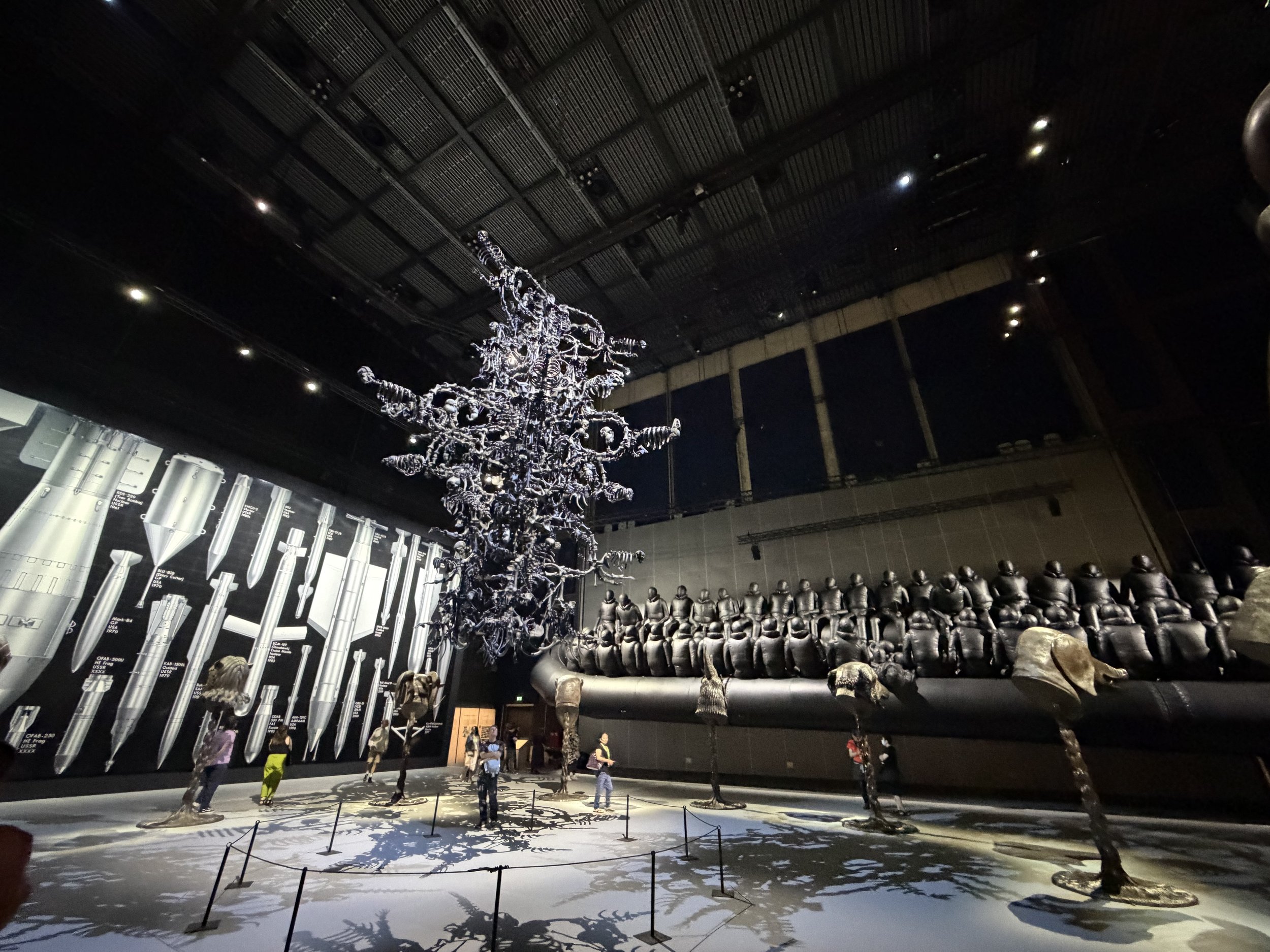
A gigantic 47-metre-long inflatable black dinghy, The Law of the Journey (2017), containing human figures, dominates one section of the Warehouse, confronting visitors with the ongoing global refugee crisis.
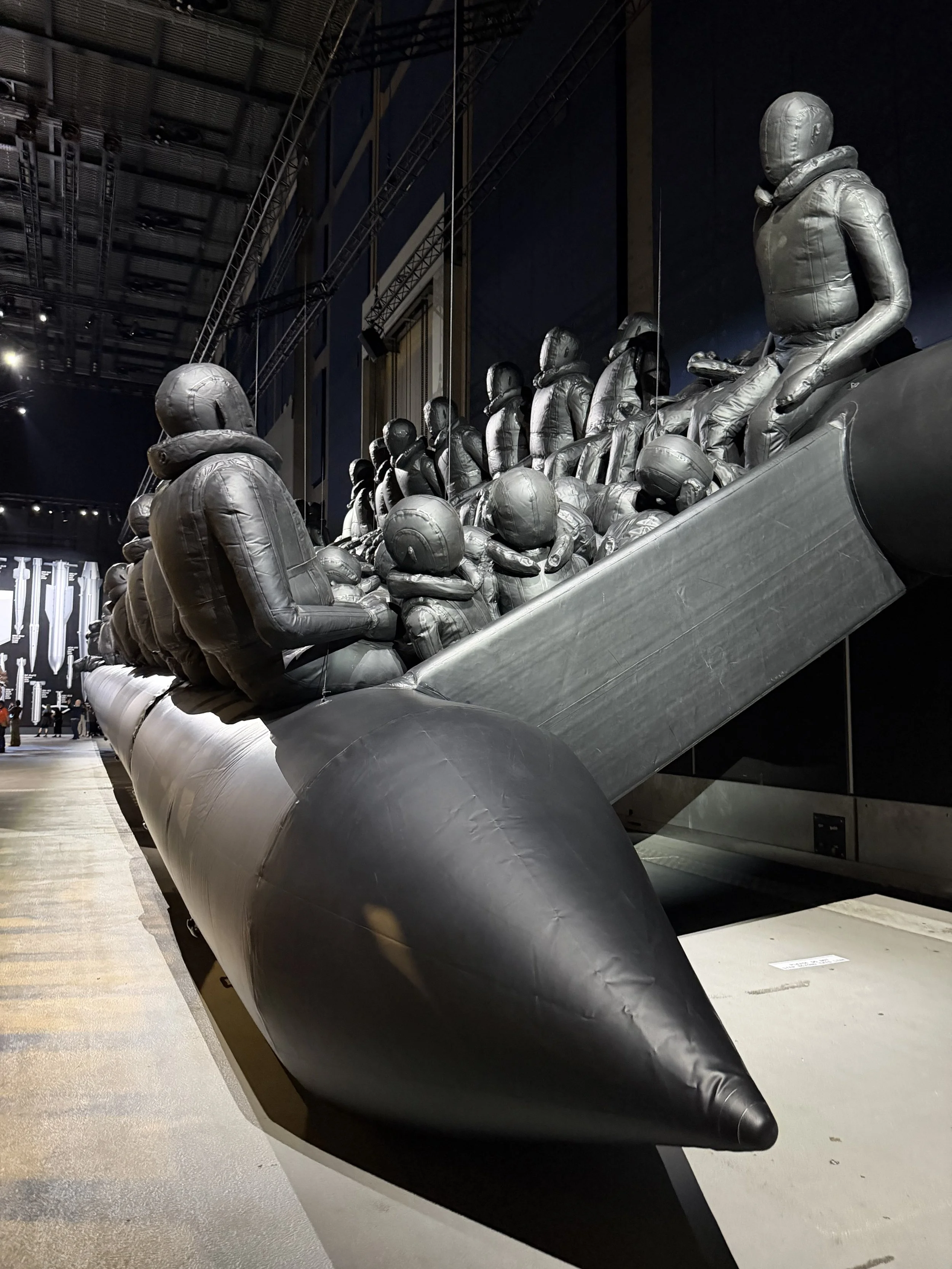
The Law of the Journey (2017) - Ai Weiwei
Nearby, History of Bombs stretches across the space, a 25-metre-wide mural made from around 3.5 million plastic toy bricks, depicting weapons of mass destruction throughout history with each one recreated to scale.
The work carries its own story: in 2015, Lego refused to carry out a bulk order for Ai Weiwei as they deemed the proposed use to be too politically motivated. The decision sparked an international backlash, with supporters around the world donating thousands of bricks instead.
One of the most striking installations is Eight-Nation Alliance Flags (2024). Made from approximately four million buttons rescued from a closing Croydon factory, it recreates the flags of the eight nations that invaded Qing Dynasty China during the Boxer Rebellion. Beautiful from a distance, it becomes increasingly unsettling as the story behind it becomes apparent.
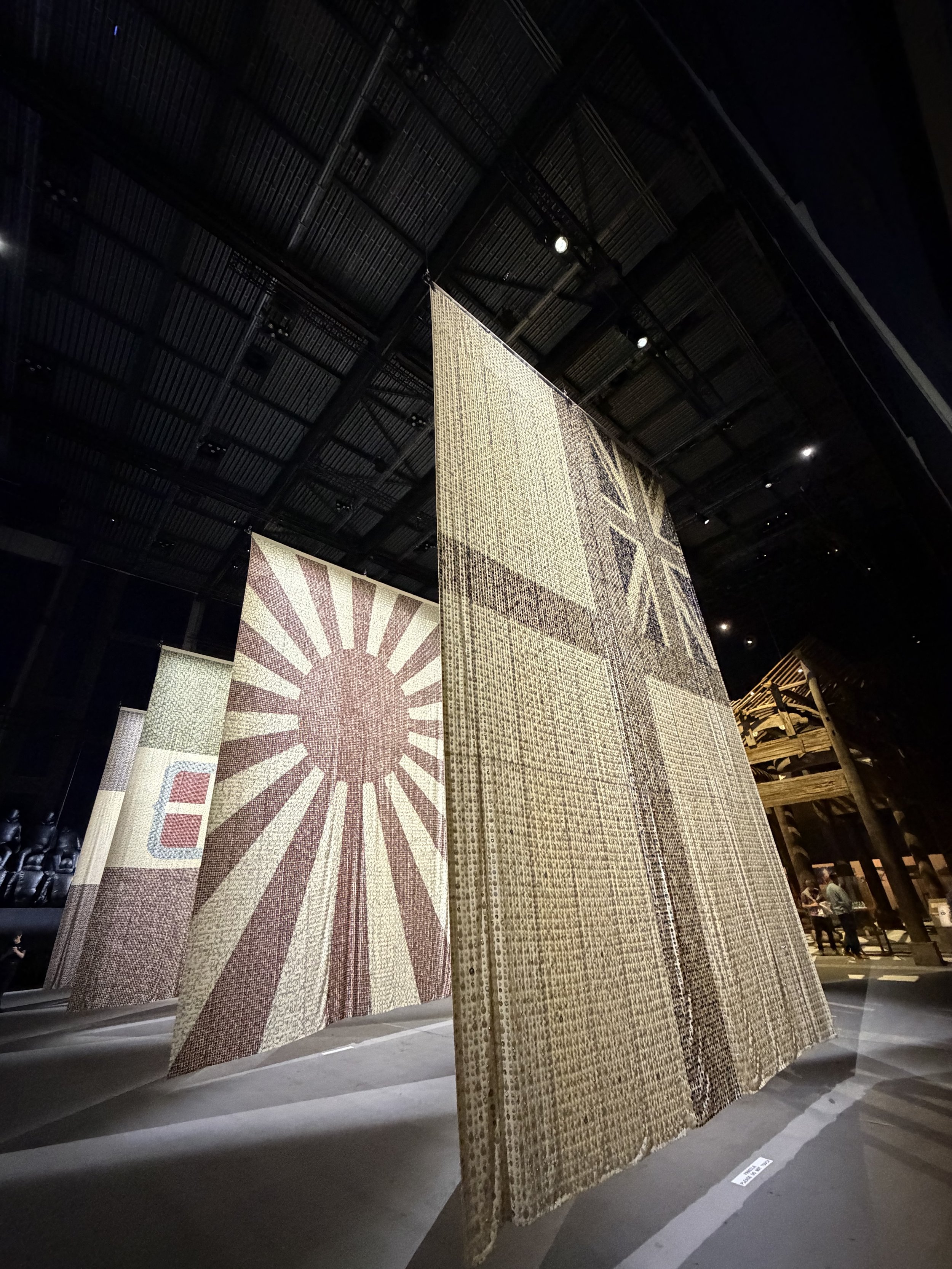
Eight-Nation Alliance Flags (2024) - Ai Weiwei
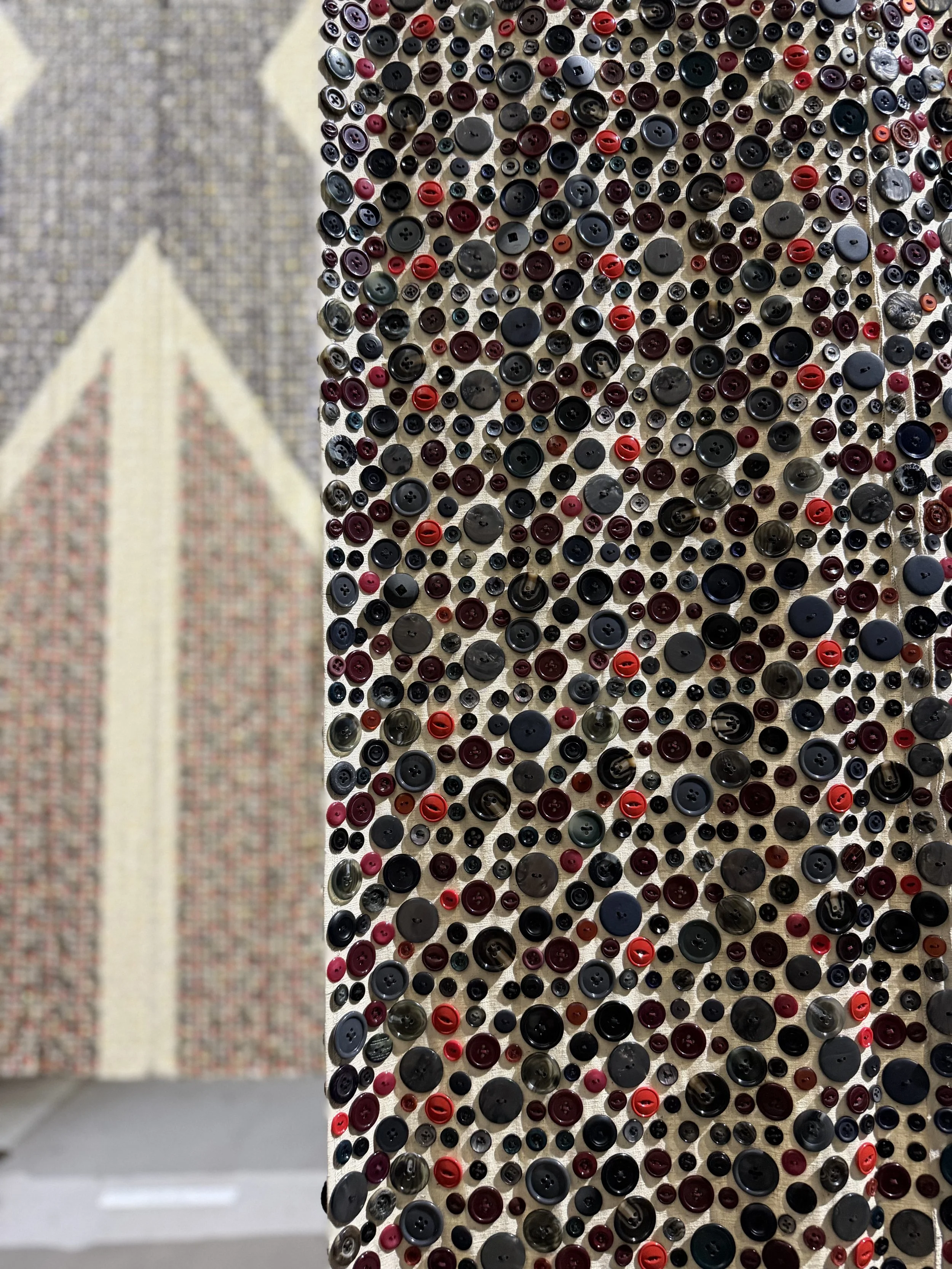
Eight-Nation Alliance Flags (2024) - Ai Weiwei
Yet despite the scale and spectacle of these works, the moment that affected me most was one of the quietest.
Throughout the exhibition, the names of children who died when poorly constructed schools collapsed during the 2008 Sichuan earthquake are read aloud, their names echoing through the Warehouse. Following the disaster, Ai Weiwei spent years investigating the tragedy after authorities attempted to suppress information about the victims.
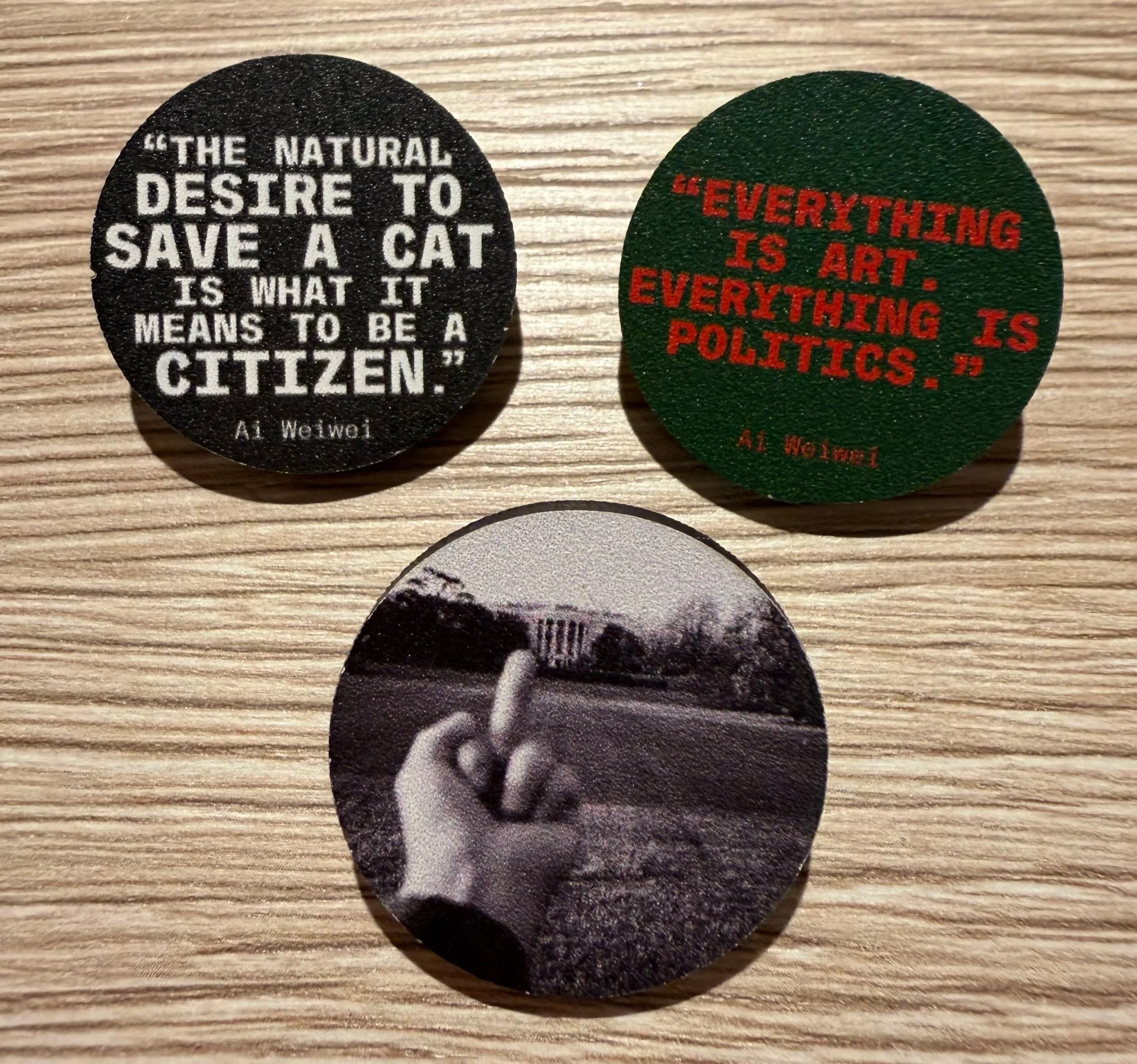
Button Up! is not simply an exhibition about politics or history; it is about memory, humanity and the responsibility to pay attention.
Ai Weiwei shows no signs of slowing down, continuing to use his art to challenge power, preserve stories and amplify voices that might otherwise go unheard.
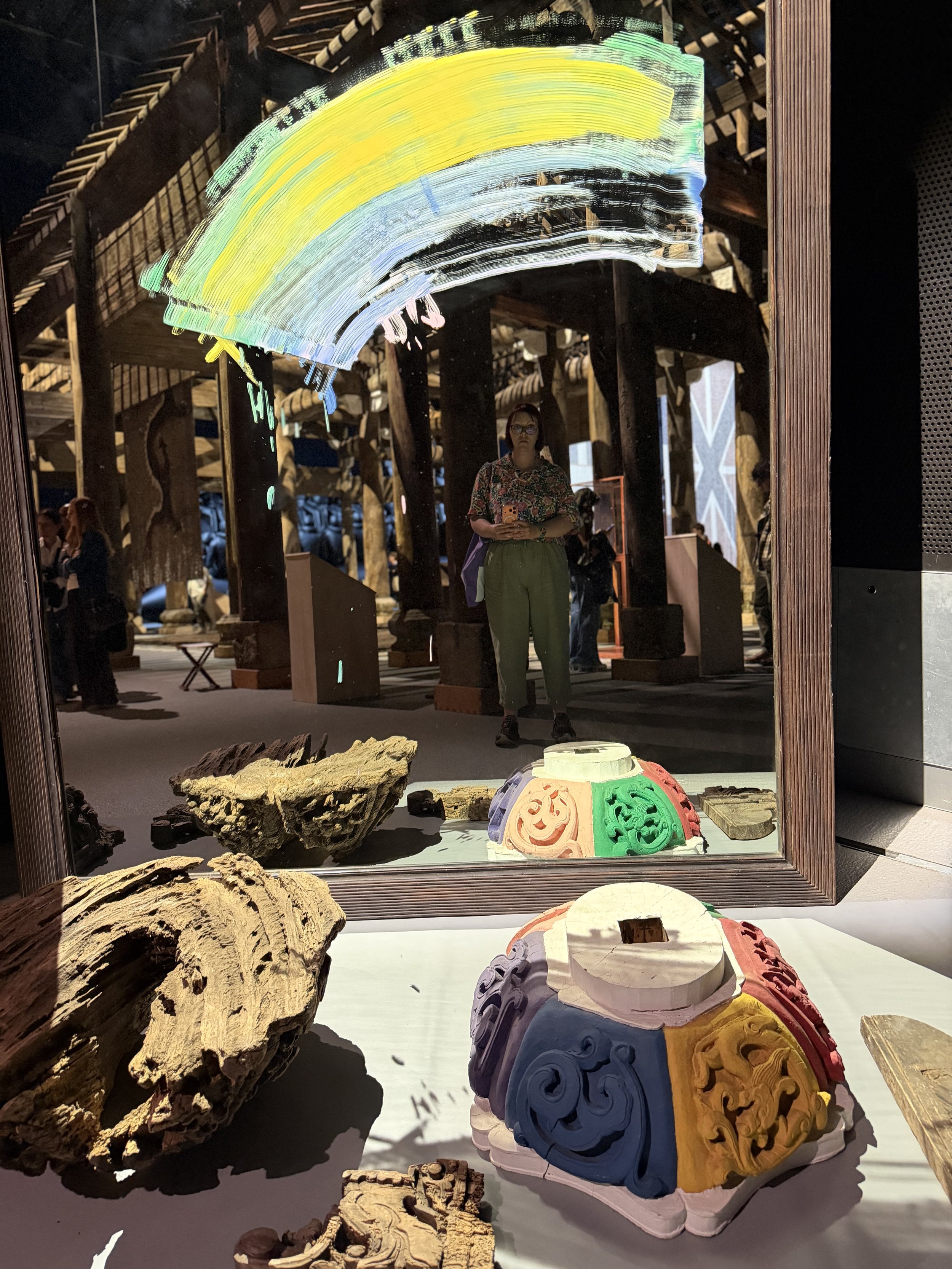
If you enjoyed this first part of my blog, you can continue with Part 2: Sewing a Button, where I reflect on witnessing Ai Weiwei's 24-hour live performance recreating the conditions of his secret detention by the Chinese authorities in 2011.
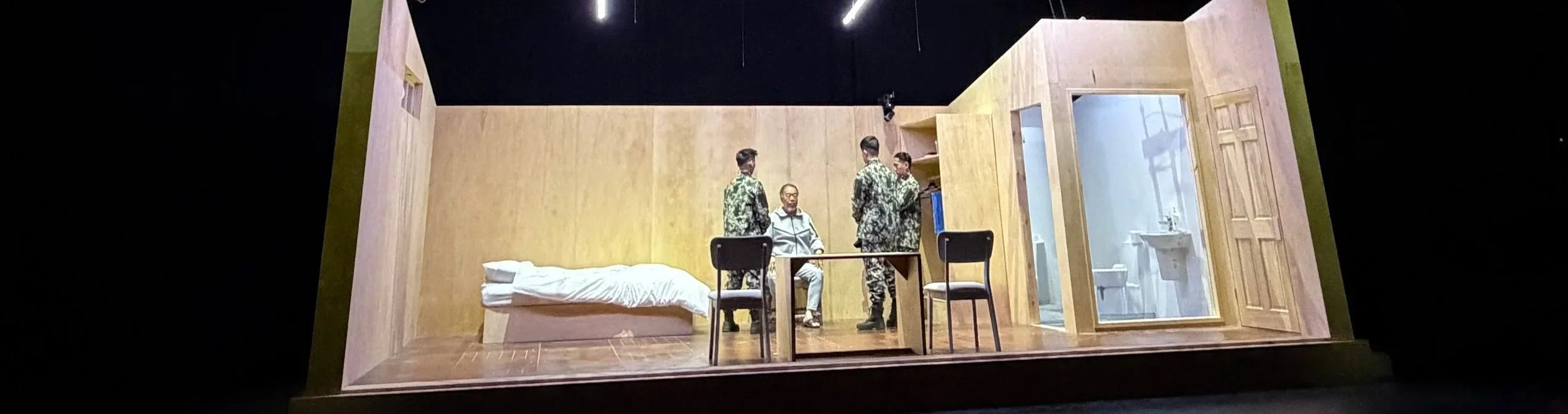
If you have the chance to visit the Button Up! exhibition before it closes on 6th September, I would highly recommend it.
It’s worth slowing down, spending time with the works and engaging with the stories behind them, even when they're uncomfortable.
For opening times and booking information visit Factory International’s official website.
